AI as a Thought Partner in UX Research
People describe it as a thought partner they didn’t know they needed
I’ve been reading Company of One, and I can’t shake this idea: What if growth isn’t the goal?
What if optimization is?
The part that resonates most with me is this:
Getting better, not bigger.
Because the real advantage of staying small isn’t scale. It’s staying nimble, close to the work, and actually making it better.
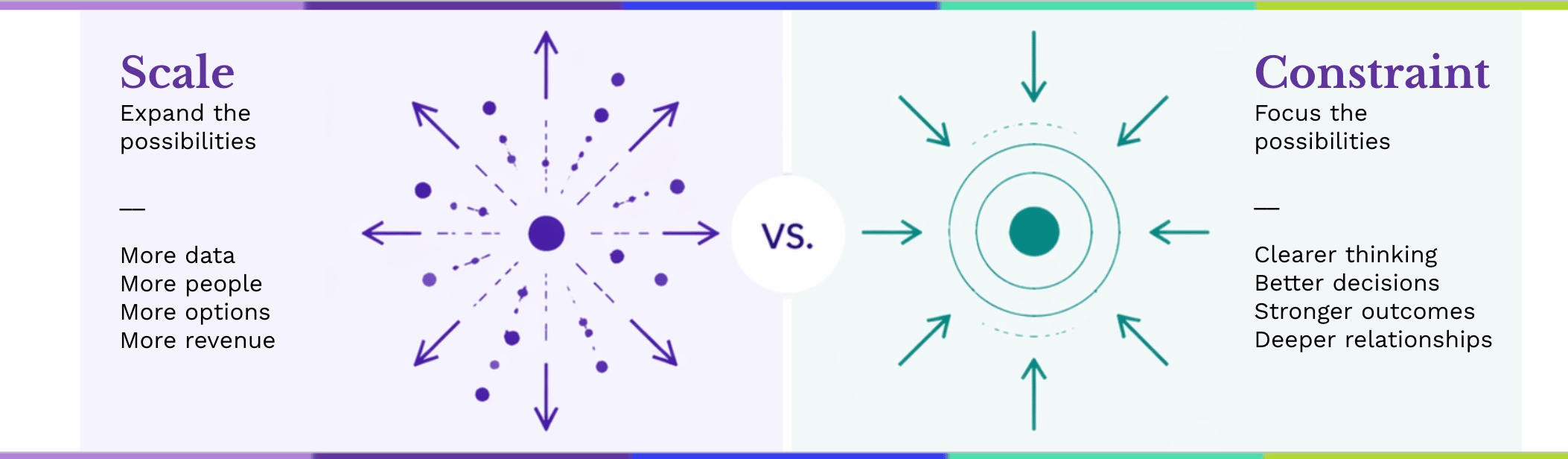
A lot of what we’re calling progress right now is just… scale. More data. More outputs. More speed. More “insights.”
We can generate more answers than ever before.
But we’re not better at knowing which ones matter. Let alone why.
Scale versus Constraint graphic
So I’ve been building something different.
Not how to scale it. The opposite.
How to constrain it.
And some of those constraints are uncomfortable:
It won’t answer every question
It pushes back on weak framing
It limits how much it gives you at once
It slows down the part that most people try to skip
What I didn’t expect was what would happen when people actually used it.
They describe it as “a thought partner I didn’t know I needed.”
But what they’re really responding to is something deeper. The ability to think out loud. To be pushed. To have their assumptions challenged in real time. To actually collaborate.
Most tools skip that layer. This one doesn’t. And it changes how people engage with the work.
Because speeding up a bad question just gets you to the wrong answer faster.
One of the more surprising use cases: Workshop planning.
Not because it’s generating a plan, but because it’s shaping how this participant thought about the workshop before they walked in. What decision are we trying to make? What tensions should we expect? Where are we likely to get stuck?
And in this case, the most valuable part wasn’t the plan at all. It was how it helped her frame the right questions for each segment of workshop participants.
It didn’t give her answers. It helped her show up sharper.
The pushback is welcome. The challenges feel right. The thinking gets better.
But at the same time:
They want it to be more digestible
Cleaner
Tighter
Easier to scan
Because even when the thinking is better, the unfamiliar format can feel like too much.
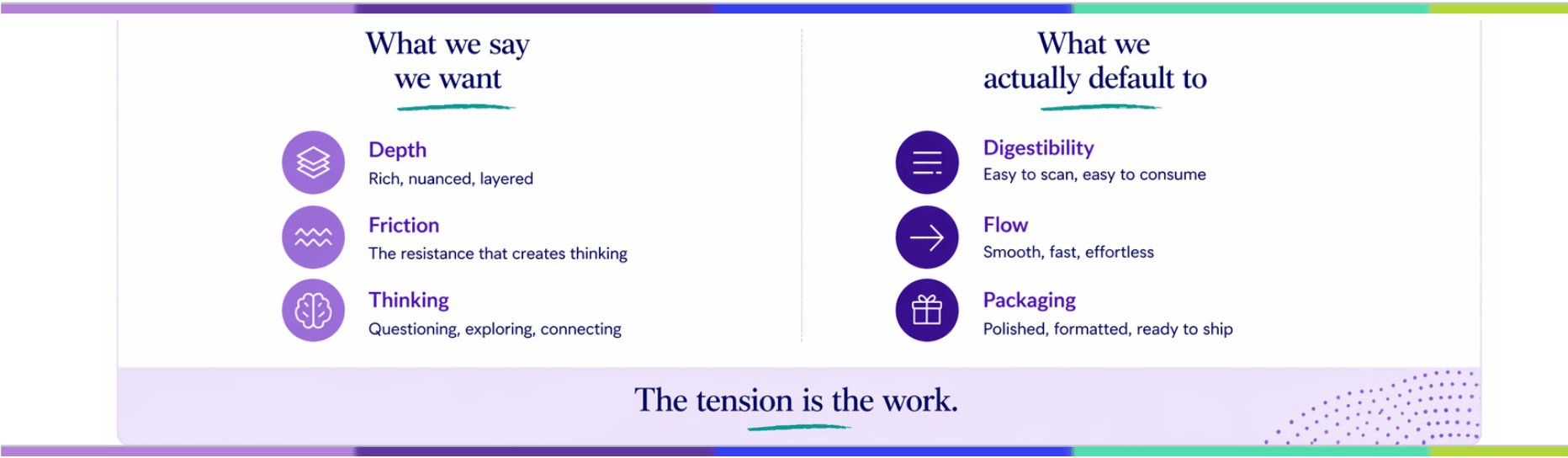
So there’s a tension here:
Depth vs. digestibility
Friction vs. flow
Thinking vs. packaging
What we say vs. what we actually do graphic
And another layer I didn’t expect: The tone truly matters. What people respond to isn’t just the output. It’s the feeling of having a trusted collaborator. It's definitely not an assistant or intern. It's much more senior, like a friendly expert.
More like joining your research team’s office hours, not a tool you prompt. Something that understands how you think and responds in kind. Not something that performs for you. Something that works with you.
That’s a much higher bar.
If this idea piques your curiosity, I’m opening up a few more early sessions next week.
In this next round, I’m especially interested in speaking with independents, PMs, marketers, designers, founders, and anyone doing research as part of their work, even if it’s not their title.
20 minutes. Screen share. You bring something real, I’ll observe and ask questions.
If you’re up for it, just hit reply and say “I’m in" and include your full name, please.
I read every reply.
– Michele
Speak up, get involved, and share the love!
Connect with Michele on LinkedIn for more UXR tips and UX discussions.
Read about Curiosity Tank workshops.
Interested in team user research training? Let us know!
Participate as an On-Demand for less!
Dive into a different UX Research term every week! Sign up for UX Lex weekly emails here.
Forward this email to someone you think might enjoy it. Better yet, sign them up here. It will be the gift that keeps on giving.
And that’s a wrap!
We try to alternate between a theme and Insights/UX/UXR jobs, events, classes, articles, and other happenings every so often. Thank you for all of the feedback. Feedback is a gift, and we continue to receive very actionable input on how to make Fuel Your Curiosity more meaningful to you.
What do you think? We're constantly iterating and would love to hear your input.
Stay curious,
- Michele and the Curiosity Tank team
