Learn User Research the Slow Way First
A colleague once said: "I want to feel the clay myself. I don't want someone else to tell me what the clay feels like." That's exactly why I'm grateful I learned user research the hard, slow way.
Leading sessions live. Connecting dots on the fly. Affinity diagramming by hand. Writing and rewriting the plan in a blank doc before templates, or touching a single participant. Sitting with the data long enough to actually digest, move it around, turn it upside down and downside up, to get intimate with it.
Was it slow? Yes. It cost me some projects on tight timelines. It frustrated others who wanted answers yesterday.
But it taught me what good actually looks like. Where the bar is, and how much higher and lower it can go.
That's the part that matters most. People racing to or overrelying on AI are skipping it. When the fast tools arrived, I had the deep-trenches knowledge to judge the output, because I already knew what good was supposed to be.
A shortcut only helps if you know the destination. A tool that generates an output is only useful if you can tell whether the output is any good. And if it's not, why not.
So if you're early in your research journey, get the pen and the sticky notes. Write the plan. Do it manually first, learn what good looks like, where the friction and failures come into play, then bring in the shortcuts and find out where they earn their place.
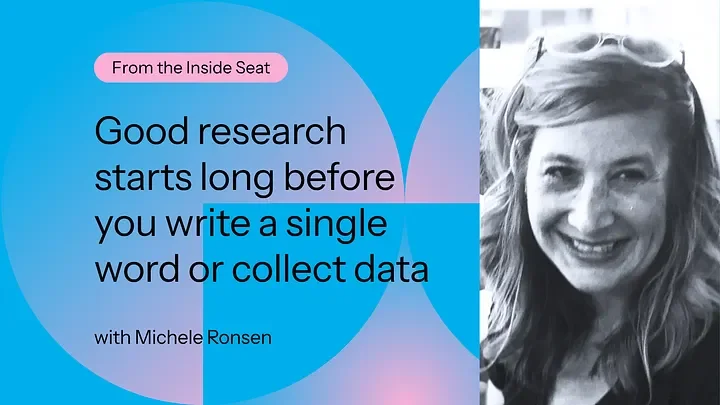
This is the throughline in my conversation with Optimal for From the Inside Seat, a great series with a fresh way to share knowledge from people who've truly been in the trenches. The clip is below.
Thank you, Heather Ecobichon, for inviting me in to share learnings from the underground!
What's something you're glad you learned the slow way?
