How to Spot Bad Research Participants
Here's a trick most product teams running their own research have never heard of or just forget about.
When you write a screener for research participants, plant a fake response option. Ask "Which of these ____ have you used in the past ____ months?" and slip in one response that doesn't exist. If they select it, they're not who they said they were. Out. No follow-up, no benefit of the doubt.
It's called a bogus item. I prefer calling them "bogeys." It's been in the methods literature for decades. For those who want to dig in deeper, check out Meade and Craig's treatment in Psychological Methods in 2012. I use one in every single screener.
And yes, I use a bogey even when sourcing from a research panel. A good panel blocks bots, duplicate accounts, and click farms. But it can’t block a real human who’s lazy, wishful, or happy to fudge an answer to get $$ for a study they don’t qualify for. That’s still on you, that’s what a bogey catches.
(Fun coming up with the bogey names too.)
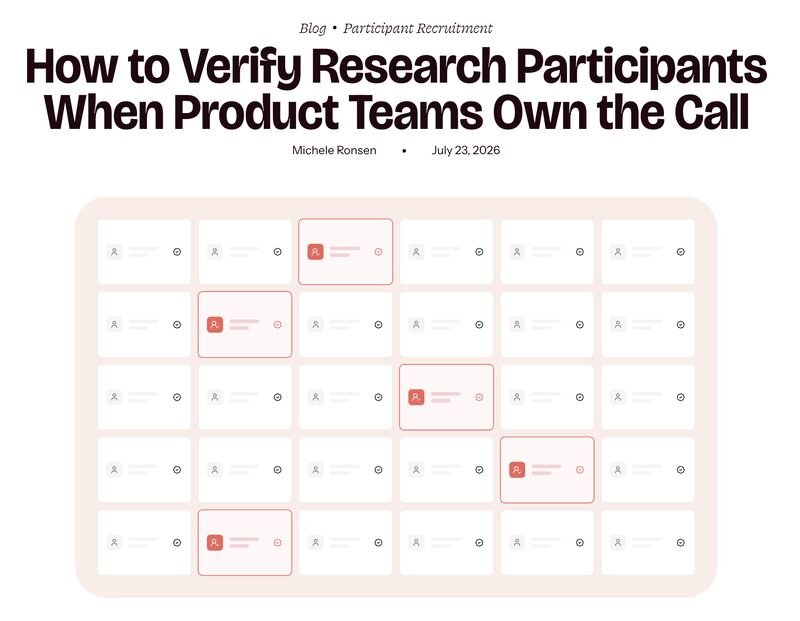
I wrote about this and more for Askable in my new piece "How to Verify Research Participants When Product Teams Own the Call." Bogus items are step 3 of the four tactics I use to make sure the people in my studies are the right ones, and real ones.
I'd love to hear your favorite bogey name or story!
Also joining Askable for a webinar on this topic Aug 5. Registration link coming as soon as it's live.
