Pressure-Test Your Research Plan Before It’s Approved
The fastest way to get someone to reject your work later is to ask them to approve it now. Your real goal is to find out if and where someone disagrees with a premise you didn't even know was a premise. That only comes out in the back-and-forth. Never in a document review, because nobody's being asked to challenge it.
That's the difference between sharing a research plan and pressure-testing one. Most teams just share if they write a plan at all. They ask stakeholders to approve an artifact, not to think alongside them.
They hand it over, asking for sign-off. Stakeholders skim it, approve it, move on. Then later, when a takeaway is inconvenient or surprising, the same people re-litigate the approach. Not because the method was wrong, but because they were never actually brought into the reasoning.
There's a better way, and it does something a document review never can. Don't ask them to approve an artifact; ask them to pressure-test it.
Walk them through the initial thinking. Ask directly for pushback. Discuss the trade-offs so they see what you considered, set aside, and why. Show them where the constraints came from. People are far less likely to reject work they helped shape, and the work will be more relevant, actionable, and likely to be used.
This back-and-forth is not wasted time. It's paramount, like kneading dough for homemade pizza. Skip it, and you're not building alignment. You're collecting signatures.
I use research planning as the example because it's where I see it most. But this is really about anything you need someone to buy into (a roadmap, a strategy, a hire, a budget, etc.). The document is never the point. The thinking behind it is.
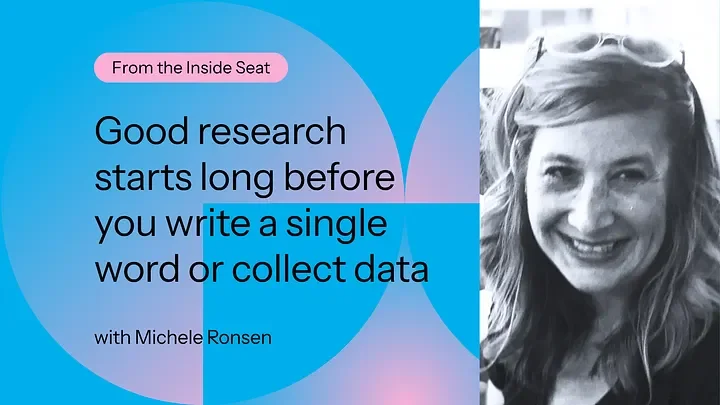
The clip below is from my conversation with Optimal and Heather Ecobichon for their From the Inside Seat series.
What's a premise your team discovered too late?
